



• Skip to main content
Press
  • Français
  • Institute
    • Mediterranean species
      Dusky grouper
      Snakelocks anemone
      White seabream
      Mauve stinger
      • About
      • › In brief
      • › Global advocacy
      • › 60+ years of history
      • › News
      • The Association
      • › Board of Directors
      • › Honorary Commitee
      • › Become a member
      • › Make a donation
      • A site in nature
      • › Mediterranean species
      • › Mediterranean biotopes
      • › Les Embiez island
      • The team
      • › Organisation
  • Research
    • Research programmes
      Environmental DNA (eDNA)
      Integrated multi-trophic aquaculture (IMTA)
      • › Research Programmes
      • › Research Center
      • › Scientific publications
      • › Scientific Communication
      • › International Cooperation
      • › Take OFF, Take Ocean For Future
  • Outreach
    • Environmental issues
      Nature-based solutions
      Biodiversity
      Governance
      • › General public and schoolchildren
      • › Popular science
      • › Newsletter
      • › Media library
      • › Press review
      • › Environmental issues
  • Blue economy
    • Interviews
      Dr Sylvain Couvray
      Dr Robert Bunet
      Olivier Dangles
      • › Le « carré magique » de la transformation
      • › Le Galpa Côte d'Azur
      • › Interviews Institute
  • Training
 › Abécédaire › Small-spotted catshark
Mediterranean species :

Small-spotted catshark

A shall and harmless shark
Did you know ?
The small-spotted catshark is oviparous. It lays egg cases that look like rectangular, cartilaginous pouches in which the embryo develops. The egg cases have filaments and are often attached to gorgonians.

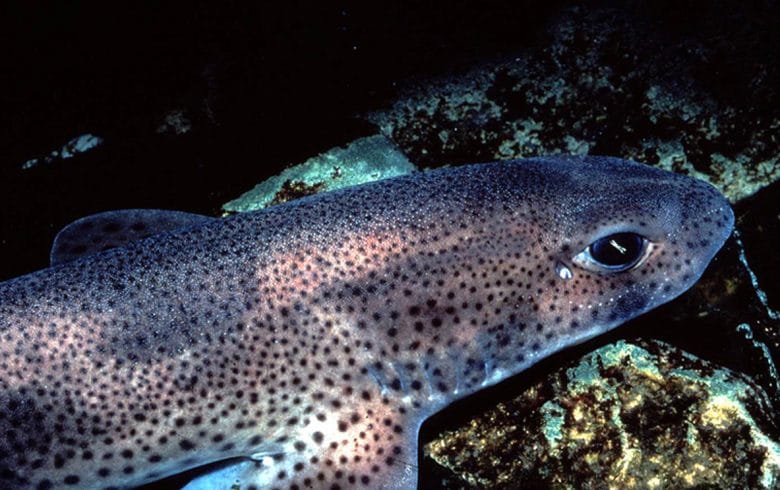
The small-spotted catshark is less than one metre long with two dorsal fins. It has a yellowish or brownish body spotted with little dark marks. This nocturnal fish feeds on small fish, crustaceans and molluscs and can be found all over the Mediterranean except in the Black Sea, and from Norway to Senegal in the Atlantic. It lives on sandy or muddy bottoms down to 400m deep. It can be found in fish markets skinned and de-headed, where it is called rock salmon because of its pink flesh.

Phylum: Vertebrates
Class: Chondrichthyes
Order: Pleurotremata
Family: Scyliorhinidae
Scientific name: Scyliorhinus canicula

French: Roussette
Spanish: Pintarroja
Italian: Gattuccio
German: Kleingefleckter Katzenhai

Spinous spider crab Prev
Slender goby Next
Institut océanographique Paul Ricard
Île des Embiez - 83140 Six-Fours-les-Plages
Tél. +33 (0)4 94 06 36 26
  • › Partners
  • › Press
  • › Sitemap
  • › Terms & Conditions
  • › Privacy Policy
  • › Cookies Policy
  • › Credits