



• Skip to main content
Press
  • Français
  • Institute
    • Mediterranean species
      Dusky grouper
      Snakelocks anemone
      White seabream
      Mauve stinger
      • About
      • › In brief
      • › Global advocacy
      • › 60+ years of history
      • › News
      • The Association
      • › Board of Directors
      • › Honorary Commitee
      • › Become a member
      • › Make a donation
      • A site in nature
      • › Mediterranean species
      • › Mediterranean biotopes
      • › Les Embiez island
      • The team
      • › Organisation
  • Research
    • Research programmes
      Environmental DNA (eDNA)
      Integrated multi-trophic aquaculture (IMTA)
      • › Research Programmes
      • › Research Center
      • › Scientific publications
      • › Scientific Communication
      • › International Cooperation
      • › Take OFF, Take Ocean For Future
  • Outreach
    • Environmental issues
      Nature-based solutions
      Biodiversity
      Governance
      • › General public and schoolchildren
      • › Popular science
      • › Newsletter
      • › Media library
      • › Press review
      • › Environmental issues
  • Blue economy
    • Interviews
      Dr Sylvain Couvray
      Dr Robert Bunet
      Olivier Dangles
      • › Le « carré magique » de la transformation
      • › Le Galpa Côte d'Azur
      • › Interviews Institute
  • Training
 › Abécédaire › Brown meagre
Mediterranean species :

Brown meagre

One of the Mediterranean's most elegant fish
Did you know ?
Brown meagre populations are increasing since a moratorium on line and spearfishing was imposed in December 2013.

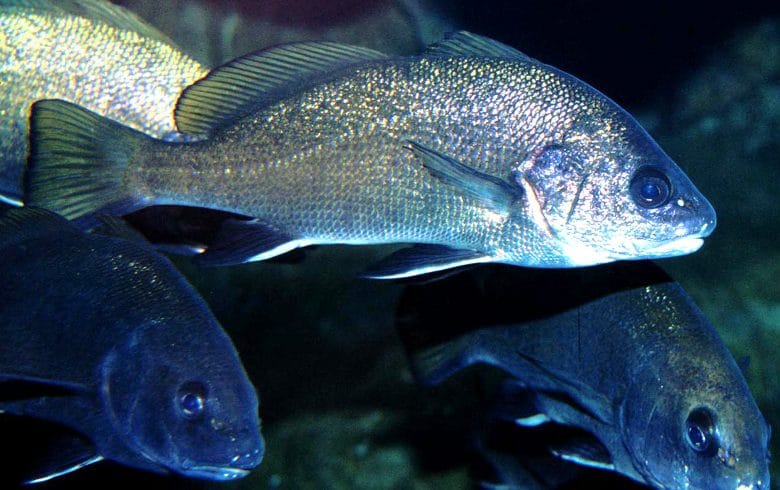
Its dark grey-brown body with flashes of gold or bronze distinguishes it from other fish, making it one of the most elegant in the Mediterranean. It has two confluent dorsal fins, one of which has a black border like the anal fin. The first rays of the anal and pelvic fins are pearly white. The brown meagre lives between the surface and 180m in small groups in the mouths of crevices and caves where it can take shelter. It comes out at night to hunt for crustaceans, fish, worms and molluscs. It can grow to 50cm long and is found in the Mediterranean, the Black Sea and in the Atlantic from south of the British Isles to Senegal.

Phylum: Vertebrates
Class: Osteichthyes
Order: Perciformes
Family: Sciaenidae
Scientific name: Sciaena umbra

French: Corb
Spanish: Corvallo
Italian: Corvo
German: Meerrabe

Brown wrasse Prev
Brown comber Next
Institut océanographique Paul Ricard
Île des Embiez - 83140 Six-Fours-les-Plages
Tél. +33 (0)4 94 06 36 26
  • › Partners
  • › Press
  • › Sitemap
  • › Terms & Conditions
  • › Privacy Policy
  • › Cookies Policy
  • › Credits