




• Skip to main content
Press
  • Français
  • Institute
    • Mediterranean species
      Dusky grouper
      Snakelocks anemone
      White seabream
      Mauve stinger
      • About
      • › In brief
      • › Global advocacy
      • › 60+ years of history
      • › News
      • The Association
      • › Board of Directors
      • › Honorary Commitee
      • › Become a member
      • › Make a donation
      • A site in nature
      • › Mediterranean species
      • › Mediterranean biotopes
      • › Les Embiez island
      • The team
      • › Organisation
  • Research
    • Research programmes
      Environmental DNA (eDNA)
      Integrated multi-trophic aquaculture (IMTA)
      • › Research Programmes
      • › Research Center
      • › Scientific publications
      • › Scientific Communication
      • › International Cooperation
      • › Take OFF, Take Ocean For Future
  • Outreach
    • Environmental issues
      Nature-based solutions
      Biodiversity
      Governance
      • › General public and schoolchildren
      • › Popular science
      • › Newsletter
      • › Media library
      • › Press review
      • › Environmental issues
  • Blue economy
    • Interviews
      Dr Sylvain Couvray
      Dr Robert Bunet
      Olivier Dangles
      • › Le « carré magique » de la transformation
      • › Le Galpa Côte d'Azur
      • › Interviews Institute
  • Training
 › Abécédaire › Shore rockling
Mediterranean species :

Shore rockling

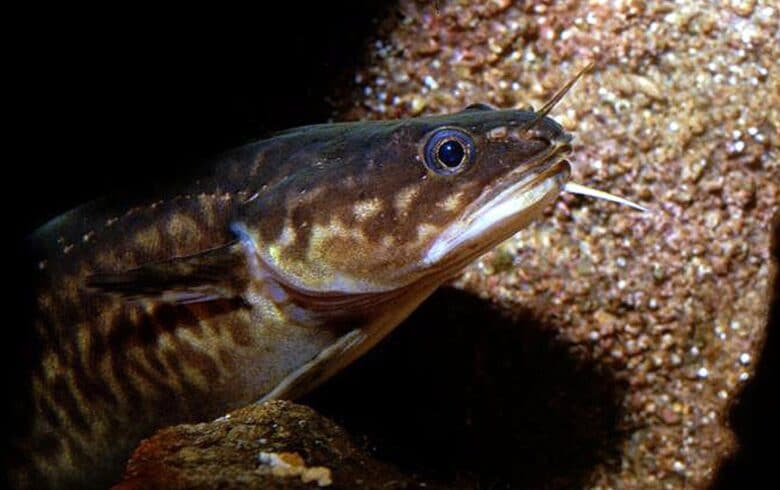
Easy recognisable from its three long barbels
Did you know ?
It is a territorial fish, always ready to charge or bite to defend its lair.

The shore rockling is an elongated fish of up to 25cm at most. It has two dorsal fins: a small one at the front followed by a second one that stretches almost to the caudal fin. It has three barbels: one under its chin and two more near its nostrils. It has a brown or reddish back with lighter spots and a pale brown or cream-coloured belly. Shore rocklings are nocturnal and feed on fish, crustaceans and worms. They live in rock crevices and in Posidonia seagrass beds down to 100m deep. Apart from the south-eastern basin, they are found in most parts of the Mediterranean including the Black Sea. In the Atlantic, they occur from Norway to Gibraltar.

Phylum: Vertebrates
Class: Osteichthyes
Order: Gadiformes
Family: Gadidae
Scientific name: Gaidropsarus mediterraneus

French: Motelle, Moustelle
Spanish: Bertorella
Italian: Motella
German: Mittelmeerquappe

Common prawn Prev
Damselfish Next
Institut océanographique Paul Ricard
Île des Embiez - 83140 Six-Fours-les-Plages
Tél. +33 (0)4 94 06 36 26
  • › Partners
  • › Press
  • › Sitemap
  • › Terms & Conditions
  • › Privacy Policy
  • › Cookies Policy
  • › Credits