
• Skip to main content
Press
  • Français
  • Institute
    • Mediterranean species
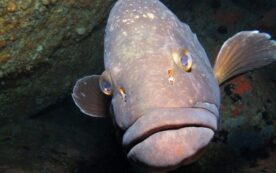
      Dusky grouper
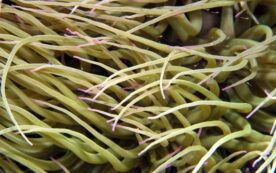
      Snakelocks anemone
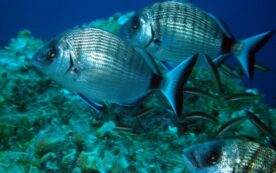
      White seabream
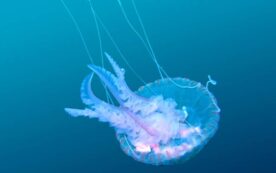
      Mauve stinger
      • About
      • › In brief
      • › Global advocacy
      • › 60+ years of history
      • › News
      • The Association
      • › Board of Directors
      • › Honorary Commitee
      • › Become a member
      • › Make a donation
      • A site in nature
      • › Mediterranean species
      • › Mediterranean biotopes
      • › Les Embiez island
      • The team
      • › Organisation
  • Research
    • Research programmes
      Environmental DNA (eDNA)
      Integrated multi-trophic aquaculture (IMTA)
      • › Research Programmes
      • › Research Center
      • › Scientific publications
      • › Scientific Communication
      • › International Cooperation
      • › Take OFF, Take Ocean For Future
  • Outreach
    • Environmental issues
      Nature-based solutions
      Biodiversity
      Governance
      • › General public and schoolchildren
      • › Popular science
      • › Newsletter
      • › Media library
      • › Press review
      • › Environmental issues
  • Blue economy
    • Interviews
      Dr Sylvain Couvray
      Dr Robert Bunet
      Olivier Dangles
      • › Le « carré magique » de la transformation
      • › Le Galpa Côte d'Azur
      • › Interviews Institute
  • Training

Climate

71% of the Earth is covered by Oceans. Marine and coastal environments are a source of biodiversity and also a preferred area for human activities, from fishing and aquaculture to shipping, sailing and tourism. Another lesser-known parameter is that Oceans are carbon sinks that store fifty times more CO2 than the atmosphere. They regulate the climate by storing, absorbing and transporting heat from the sun, significantly influencing temperatures and weather patterns. Exchanges between Oceans and the atmosphere have a mutually balancing effect, and any disruption negatively impacts the physical, chemical and biological functioning of the Ocean.

Climate change causes and exacerbates various phenomena that impact our Oceans, such as rising sea levels, changes in water temperature, acidification, deoxygenation and changes in Ocean currents. Our Oceans’ capacity to absorb excess heat from the atmosphere is currently being modelled and is expected to decline.

As research progresses and scientists speak out, the fight against climate change has taken centre stage. Policy-makers may have been slow to wake up but there is a real and growing sense of urgency, particularly at international meetings (UN, COPs, etc). This in turn is leading to national policies that must progressively push our economies towards low-carbon models. At the same time, climate change mitigation and adaptation measures are on the rise. This includes protecting marine biodiversity, recognising ecosystem services, developing a blue economy, expanding scientific knowledge and changing regulations.

Biodiversity

The 1992 Convention on Biological Diversity in Rio de Janeiro adopted the following definition of biodiversity: “the variability among living organisms from all sources, including, inter alia, terrestrial, marine and other aquatic ecosystems and the ecological complexes of which they are part: this includes diversity within species, between species and of ecosystems.”

The Mediterranean is one of the world’s 34 biodiversity hotspots identified by the non-governmental organisation Conservation International (CI). While it represents only 0.82% of the world’s Ocean surface, it is a major reservoir of marine and coastal biodiversity. 28% of its populations are endemic species, and its 8500 macroscopic organisms make up 7.5% of the world’s marine fauna and 18% of its flora.

However, as elsewhere, human activities are having a massive impact on biodiversity and creating multiple challenges. Habitats are disappearing, pollution is impacting the physicochemical profile of its waters, fish stocks are under pressure and climate change is driving the spread of invasive species.

If plant or animal species are allowed to disappear, the ensuing loss of genetic diversity, food resources and undiscovered medical or industrial potential will be irreversible. It is however important to bear in mind that biodiversity is always evolving. With climate change, new species are appearing in the western Mediterranean without necessarily creating an imbalance in existing ecosystems.

Today, we have more and more solutions for protecting biodiversity, including protected areas, legislation giving special status to our coastlines or to certain species (like Posidonia seagrass, fan mussels or dusky grouper), wastewater treatment and the restoration of shallow coastal waters.

Nature-based solutions

By observing nature and natural phenomena, scientists seek to understand them and to innovate on that basis. Bio-inspiration can be applied to three aspects:

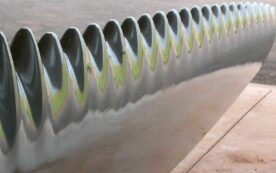
> shapes and structures – the kingfisher’s beak is shaped to allow it to dive into water at high speed without a splash. By studying this, researchers and engineers designed the distinctive nose of the Shinkansen, Japan’s bullet train, which cuts through the air more easily thereby consuming less energy and eliminating sonic booms in tunnels;

> processes and materials – mussels produce a powerful glue that holds them on rocks despite crashing waves. Once researchers understood how this substance was produced, they developed a surgical glue for human tissue that can replace stitches and staples and avoid scarring;

> ecosystems and balances – ecosystems function in such a way that waste from one species becomes a resource for another. The replication of circular production models stems directly from bio-inspiration, and permaculture is one example of this.

The Institute believes firmly in bio-inspiration and the marine environment is a huge source of inspiration for our researchers. By helping to better understand how ecosystems function, they are bringing to light the creative genius of the living world and its four billion years of experience.

Living resources

At the same time, over three billion people depend on food from the sea for their survival, a figure that will only rise in the future as demographic growth reaches new heights.

Local solutions usually involve rotating the zones in which fishing is allowed, creating “fallow” periods when fish populations can rebuild. Local fisherfolk are often best-placed to describe the resource that is their livelihood, whether in the Mediterranean or on remote tropical islands. When it comes to industrial fishing fleets, drastic regulations are the only way to manage living resources and save them from depletion.

Some countries have adopted a comprehensive marine resources management approach, like The Blue Belt in Morocco, launched at the COP22 and supported by the country’s fisheries research institute (INRH). The Blue Belt is a set of concrete solutions, a roadmap for adapting to climate change while mitigating its effects. It offers a framework for fostering a low carbon fisheries economy with a low environmental footprint on marine and coastal ecosystems.

Sustainable consumption and responsible fisheries, targeting abundant species whose stocks can renew themselves, are increasingly important today, and several NGOs are working to guide consumers towards making these choices, but more avenues must be explored.

We now know that conventional aquaculture, long seen as the best additional source of fish, has its limits, since farmed species are fed with fishmeal, which also puts pressure on fish resources. Aquaculture waste also pollutes the environment. Some of the most promising alternatives include:

> installing artificial reefs in our coastal waters, in the nursery areas of commercial species, where more juveniles can grow to their adult size;
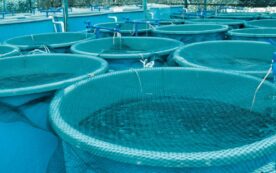
> new forms of aquaculture using the waste from one species to feed another by recreating nature’s virtuous cycle while minimising inputs of food;
> replacing fishmeal with insects in conventional aquaculture.

Governance

It differentiates the high seas from areas under coastal state jurisdiction (territorial waters, exclusive economic zone, continental shelf) and instates several key principles: freedom of navigation, an obligation to negotiate contested boundaries and cooperate to manage fish stocks, and the common heritage of mankind principle for the deep seabed and its resources.

There are several agencies within the United Nations system that govern the world’s seas: the International Maritime Organisation (IMO) regulates navigation, the Food and Agriculture Organization (FAO) is responsible for fisheries, the International Seabed Authority (ISA) regulates mining exploration and extraction in the high seas, and UN Environment (formerly UNEP) fights pollution and supports Regional Seas Conventions.

Since ocean governance is decentralised, coastal states in the same region must agree on common rules. In the Mediterranean, the Barcelona Convention of 1976 aims to reduce pollution and protect this fragile area. The Mediterranean Action Plan (MAP) and the Blue Plan both stem from the Barcelona Convention and were established to implement sustainable approaches and encourage governments and other stakeholders to adopt them.

The Mediterranean, a model ocean

Despite their cultural and economic differences, the countries of the Mediterranean are aware of their collective responsibility to protect the future by acting sustainably today. As such, the Barcelona Convention was adopted in 1975 under the auspices of the United Nations Environment Programme (UNEP), calling on countries to adopt a Mediterranean Action Plan (MAP).

The Mediterranean is a biodiversity hotspot, making its preservation a global priority. This involves creating more and more marine protected areas (MPAs), of which there are over one thousand in the Mediterranean. In France, an exemplary 20% of coastal waters are protected.

Protected areas are an essential tool for dealing with climate change and changes in biodiversity. They also help better manage fish stocks and can serve as laboratories where new solutions can emerge. At the Paul Ricard Oceanographic Institute for example, nature-based solutions are being studied there, aimed at finding ways to sustainably harness the sea as our ally.

As the cradle of civilisations, the Mediterranean can and must be a font of solutions that we can deploy together to address the changes on the horizon.

Institut océanographique Paul Ricard
Île des Embiez - 83140 Six-Fours-les-Plages
Tél. +33 (0)4 94 06 36 26
  • › Partners
  • › Press
  • › Sitemap
  • › Terms & Conditions
  • › Privacy Policy
  • › Cookies Policy
  • › Credits