
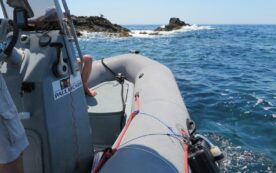


On June 8th, EDF and the Institut signed a new partnership agreement relative to the monitoring of the ecological state of the Calanque de Podestat and two other sites in the core area of the Calanques National Park.
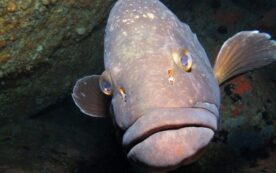
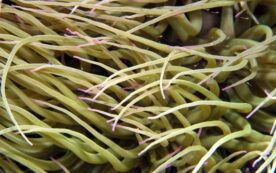
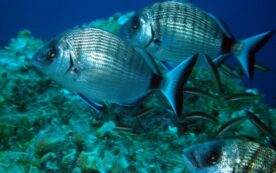
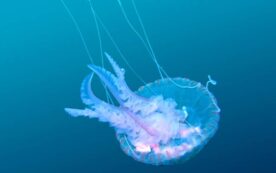
In 2012, EDF, the owner of the site, entrusted the Institut océanographique Paul Ricard with the task of carrying out a study to produce an exhaustive inventory of the fauna and flora of the calanque. This inventory work and the detailed mapping of the area provided a basis for describing an initial state. Following this ‘Zero State’, corresponding to the year of the Calanques National Park’s foundation, a survey has been carried out twice a year to monitor changes in the fauna and flora.
Much of the calanque, over an area of 1.26 hectare and a maximum depth of 16 metres, is occupied by varyingly coarse-grain sandy bottoms surrounded from east to west by a rocky border formed of large blocks, scree, cliffs or fixed rocks with a large cave in the south-west. It ends with a shingle beach extending beneath the water. There is no Posidonia oceanica bed, but the presence of roots and dead matte beneath several centimetres of sediment shows that this ecosystem was formerly implanted in this calanque. Its disappearance was probably linked to the proximity of the Cortiou outlet that discharges sewage from the Marseille conurbation.
Assessing the patterns of change in the communities
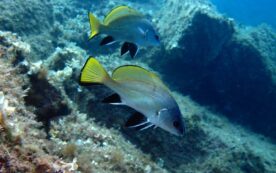
The aim of the monitoring surveys is to assess the patterns of change in the communities in the calanque, in particular the Gorgonians, the echinoderms and the fishes, and also to assess the quality of the water in response to environmental changes: improvement of the treatment of the urban sewage and rainwater at the neighbouring wastewater treatment plant (Cortiou); change of protection status with the creation of the Calanques National Park; global Mediterranean climate changes.
Despite the presence of species that are indicators of pollution, such as the green algae (Ulva and Enteromorpha) on the edge of the beach, and the richness in echinoderms, this first study appears to show a fairly satisfactory ecological state. The most remarkable habitats at the site are located in the western part: Lithophyllum rims, biocenosis of semi-dark caves and underwater cave.
Extending the monitoring zone
But in the face of climate change, EDF wishes, with the Institut, to extend this monitoring zone in order to validate the observations made and to measure the impact of the regulations in force in this zone.
“We know today”, Patricia Ricard emphasises, “that climate change is the main threat for the Ocean and biodiversity, and that more than ever it is important to make innovation our priority in order to speed up our transitions. The environmental commitment of enterprises is urgent and fundamental. It is indispensable to drive the dialogue on these issues between all the stakeholders: science, the economy, institutions and territories. It is thanks to this kind of collaboration that we will be able to meet the challenges that lie ahead.” Frédéric Busin, Director of Action Régionale EDF Provence Alpes Côte d’Azur, and co-signatory of the partnership, recalled on this occasion that “electricity and our innovative services constitute the means to build a CO2 neutral future. Reconciling the preservation of the planet, our well-being and development.”
Photo: Patrick Lelong.